
Handmade Wooden Bowls: What Makes a Hand-Turned Bowl Different?
Jamie Torr — Maker, The Country Table, Tamworth NSW
There’s a big difference between a wooden bowl and a bowl that has been turned by hand.
For me, it starts well before a piece of timber ever reaches the lathe.
When I choose timber for a bowl, character comes first. I’m looking at the grain, the colour, the marks and imperfections, but more than anything I’m asking myself: does the wood speak to me before I even turn it?
I don't necessarily start with an exact picture of what the finished bowl has to look like. The timber has a lot to say about that.
Letting the timber guide the shape
One of the things I love most about woodturning is watching a fairly ordinary-looking piece of timber come to life.
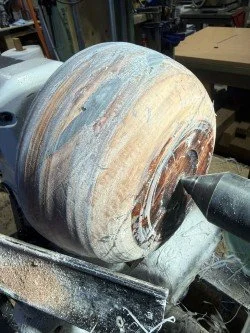
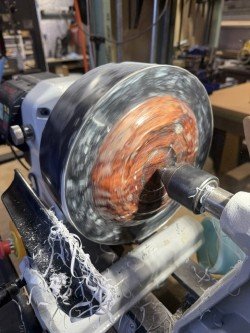
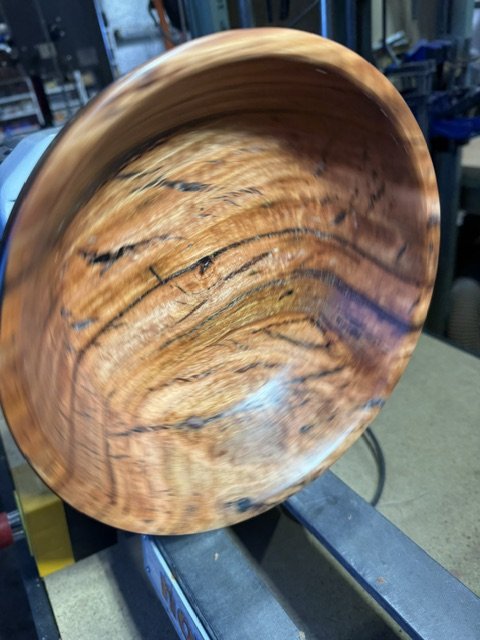
As I begin turning away the outside layers, the grain starts to reveal itself. Colours change. Patterns appear. Features that weren't obvious at the beginning suddenly become the most interesting part of the piece.
That's often when I start seeing the final shape.
I might have an idea when I begin, but I don't want to force every piece of timber into the same design. No two pieces of wood unravel themselves in exactly the same way.
A pattern, a change in grain or some unexpected character in the timber can guide me towards the finished piece.
That's a big part of why I enjoy doing it.
Around six hours for a single bowl
A handmade bowl isn't something that comes off a production line every few minutes.
A typical bowl takes me around six hours from selecting the timber through turning, shaping, sanding and finishing.
And the time isn't really the point.
If the shape doesn't look right, I keep working it. If the grain suggests something different from what I originally had in mind, I'll follow it.
The aim isn't to make the next bowl identical to the last one. It's to make the best piece I can from the timber in front of me.
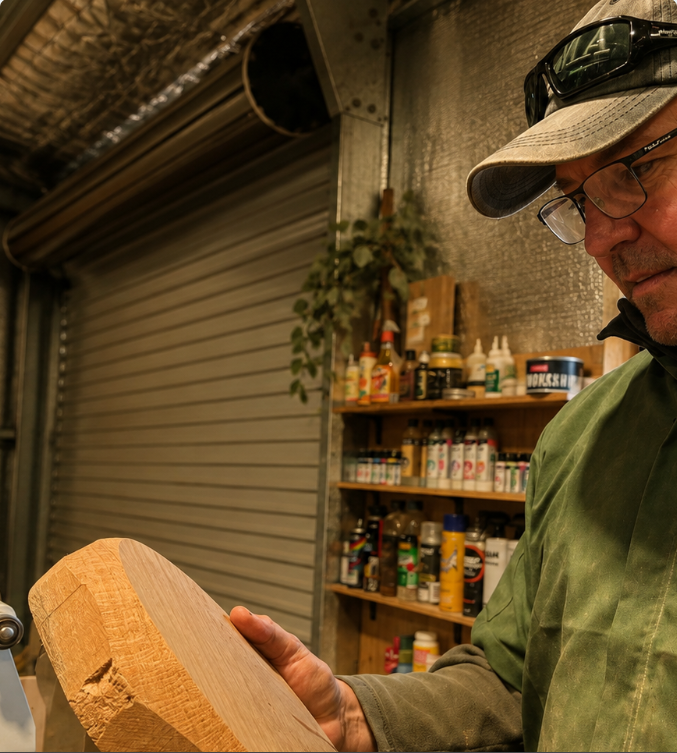
Finishing it naturally
I also enjoy the finishing stage.
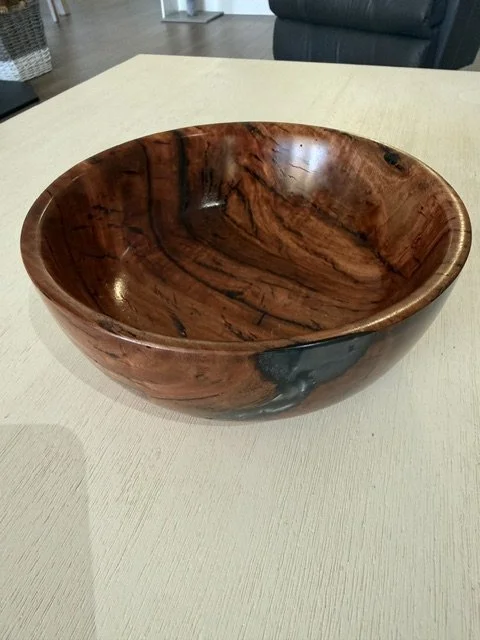
On many of my bowls I use beeswax, and part of the appeal is simply how natural it is. I love the smell of it in the workshop, and I like seeing the timber come alive as the finish goes on.
After hours of turning and sanding, that's the point where the bowl finally starts looking like the piece I'd imagined—or sometimes something better than I'd imagined.
Why no two bowls are the same
That's probably the biggest difference between one of my bowls and something that's been mass-produced.
No piece is the same.
Even if I started with two pieces of the same timber species and aimed for roughly the same dimensions, the grain and character wouldn't be identical. And because I let what I uncover during turning influence the finished shape, I wouldn't expect the bowls to be identical either.
That's why so many of the pieces at The Country Table are genuinely one of a kind.
The timber determines part of the story. My job is to uncover it.
From my workshop in Tamworth
I make each piece personally in my workshop in Tamworth, NSW.
Some timber begins with obvious beauty. Other pieces can look fairly plain, weathered or unremarkable until they're put on the lathe.
Those are often the ones I enjoy most.
There's something satisfying about taking an old piece of timber and slowly discovering what has been sitting underneath the surface all along.
That's what makes a hand-turned wooden bowl different to me. It isn't just the finished bowl—it's allowing the timber to show you what it can become.